Last Updated: November 17, 2026
Quick Summary
The truth about fighter pilot training is that most candidates are filtered out during selection, not in the air. Before flight training begins, candidates must clear pass/fail gates covering a four-year college degree, aptitude testing, a selection board, vision screening, and a strict medical review.
- A weak aptitude score closes the door regardless of grades.
- Corrective surgery does not automatically clear a candidate for vision standards.
- Physical requirements include neck and spine conditioning for high-G maneuvering.
- Navy fighter pilot training begins at Naval Air Station Pensacola with indoctrination and water survival.
- Students who succeed absorb correction and repeat correct procedures until automatic.
Table of Contents
- Fighter Pilot Requirements: What It Actually Takes to Start
- Physical Requirements to Be a Fighter Pilot: Fitness Beyond the Gym
- Fighter Pilot Training Duration: The Timeline Nobody Shows You
- Navy Fighter Pilot Training: From Pensacola to the Fleet
- Myth vs. Reality: What Hollywood Gets Wrong About the Cockpit
- What Happens When Training Doesn’t Go to Plan
- Frequently Asked Questions
Fighter Pilot Requirements: What It Actually Takes to Start
The truth about fighter pilot training starts long before anyone straps into a jet. According to the U.S. Navy’s official officer programs guidance, candidates first have to clear a selection process built around academics, aptitude, and medical fitness, and most people are filtered out at that stage rather than in the air. The gap between a movie cockpit and a real one begins with paperwork, not dogfights.
Fighter pilot requirements are the minimum academic, physical, and medical standards a candidate must meet before flight training begins. They are pass/fail gates, not preferences.
Education, Aptitude, and the Selection Board
A four-year college degree is the baseline for officer commissioning, and while no single major is mandatory, technical fields tend to sit well with selection boards. What matters more is the aptitude testing: candidates sit standardized exams that measure spatial reasoning, math, and mechanical comprehension. A common mistake is treating a strong GPA as sufficient. It isn’t. The board weighs test scores, leadership history, and interview performance together, and a weak aptitude score closes the door regardless of grades.
Vision and Medical Standards
Vision and medical screening eliminates more hopefuls than any other single requirement. Uncorrected vision thresholds, color vision, depth perception, and a full review of heart, lung, and neurological history all come under scrutiny. A common mistake is assuming corrective surgery automatically clears a candidate. Federal aviation medical standards show how detailed these evaluations are, and military flight physicals are stricter still.
Before anyone straps into a jet, these are the pass/fail gates candidates must clear.
| Requirement | What it involves | Key point |
|---|---|---|
| Education | Four-year college degree for officer commissioning | No single major mandatory |
| Aptitude testing | Standardized exams on spatial reasoning, math, mechanical comprehension | Weak score closes the door regardless of grades |
| Selection board | Weighs test scores, leadership history, interview performance | Strong GPA alone is not sufficient |
| Vision screening | Uncorrected vision thresholds, color vision, depth perception | Corrective surgery does not automatically clear a candidate |
| Medical review | Heart, lung, and neurological history | Military flight physicals stricter than federal aviation standards |
Physical Requirements to Be a Fighter Pilot: Fitness Beyond the Gym
Physical requirements to be a fighter pilot go well beyond passing a general fitness test. Candidates need cardiovascular endurance, core and neck strength, and the ability to tolerate sustained acceleration loads. Neck and spine conditioning matters because high-G maneuvering compresses the body repeatedly, and pilots who neglect it pay for it later. Grip strength, leg press capacity for the anti-G straining maneuver, and healthy body composition all factor into the flight physical. The gym work is real, but it’s specific, not general.
Fighter Pilot Training Duration: The Timeline Nobody Shows You
Fighter pilot training takes place in stages, and progress is measured across ground school, simulator sessions, academic exams, and airborne sorties alike. For a firsthand perspective on the long training journey, read Chasing the Horizon, Lessons From the Sky.
For a firsthand account of how long that road feels from the inside, read about the long climb from dreams to the cockpit.
Navy Fighter Pilot Training: From Pensacola to the Fleet
Navy fighter pilot training begins at Naval Air Station Pensacola with aviation indoctrination, water survival, and physiological training before a student ever flies. From there, the pipeline moves through primary, intermediate, and advanced phases, each flown in a different airframe with a different set of grading standards.
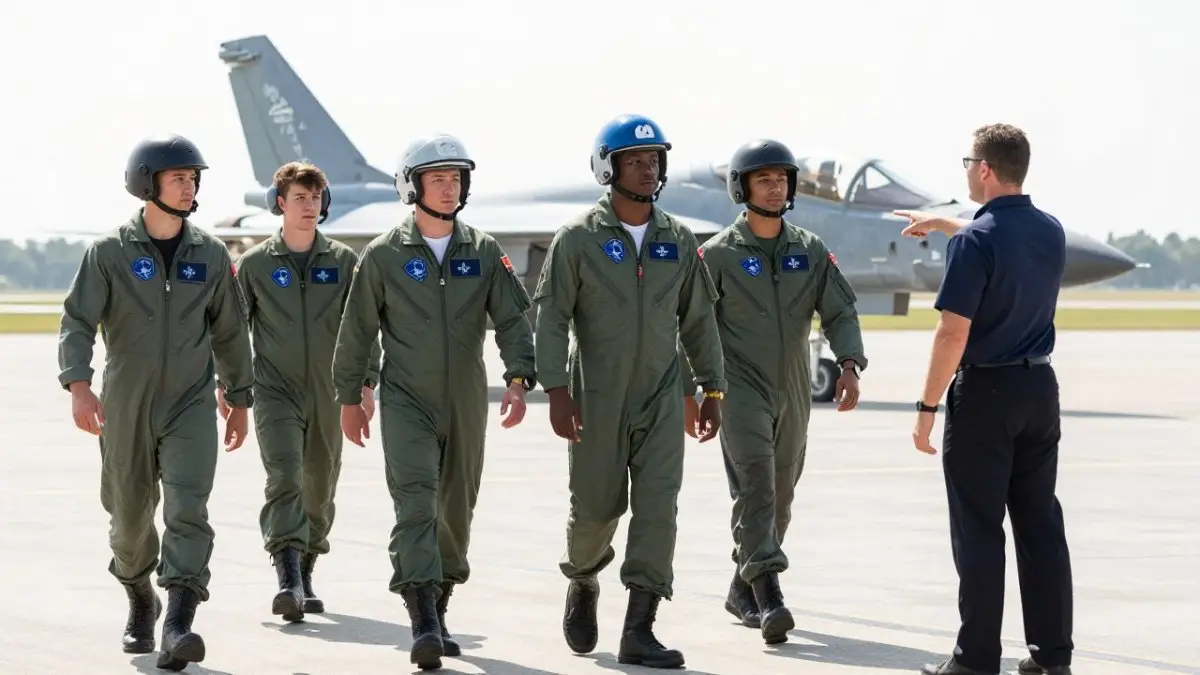
Primary, Intermediate, and Advanced Phases
Students who want the full account of this journey can buy the paperback account of the Top Gun experience.
Myth vs. Reality: What Hollywood Gets Wrong About the Cockpit
Hollywood sells a version of fighter pilot training built on instinct, lone-wolf heroics, and split-second improvisation. The reality is procedural discipline, checklist compliance, and relentless debriefing.
The most persistent myth is that natural talent carries a student through. In practice, the students who succeed are the ones who absorb correction and repeat the correct procedure until it becomes automatic. The cockpit is loud, cramped, and unforgiving, and situational awareness is built through repetition, not bravado. For a deeper look at why film aviation gets it wrong, read why Hollywood keeps getting aviation wrong, and for the real story behind the legend, explore the untold grit behind America’s Top Gun legend.
What Happens When Training Doesn’t Go to Plan
The psychological pressure is real, and stress tolerance is assessed continuously rather than tested once. A common mistake among candidates is treating a setback as career-ending. It usually isn’t. It redirects.
What separates the pilots who make it is rarely raw talent. It’s the willingness to be corrected, debriefed, and sent back up. That is the reality this author writes about: discipline, purpose, and courage under pressure.
If you want the unvarnished version of this world rather than the dramatized one, that is exactly what FRANK S HECKER delivers: authentic perspective on elite fighter pilot life, a clear distinction between Hollywood portrayals and reality, and hard-won lessons from the sky. Get started with FRANK S HECKER and read the account that puts you in the cockpit for real.
Frequently Asked Questions
How long does it take to become a fighter pilot?
The timeline varies based on aircraft type and individual progress, and the commitment extends well beyond flight school.
What are the physical requirements to be a fighter pilot?
The physical requirements to be a fighter pilot include meeting strict vision standards, passing a comprehensive flight physical, and demonstrating cardiovascular fitness and stress tolerance. Candidates must handle high-G maneuvers without losing consciousness, maintain spatial awareness under pressure, and show resilience during sustained workload. These demands go far beyond basic gym fitness and are tested continuously throughout training.
What happens if a student fails fighter pilot training?
Students who struggle in fighter pilot training may be attrited, meaning they are removed from the program. This can happen for academic, flying, or medical reasons. Some may be reassigned to other aviation roles or military jobs, while others leave service. The washout rate is real, and it reflects the high standards required to operate fighter aircraft safely and effectively.
How does Navy fighter pilot training differ from Air Force training?
Navy fighter pilot training emphasizes carrier operations, including catapult launches and arrested landings, which are not part of Air Force training. The Navy pipeline also focuses heavily on over-water navigation and shipboard integration. While both services share core flying skills, the Navy’s approach prepares pilots for the unique demands of life aboard an aircraft carrier and the precision required for carrier landings.
